
Putting Childhood Back in Motion
by Alysa Meeks
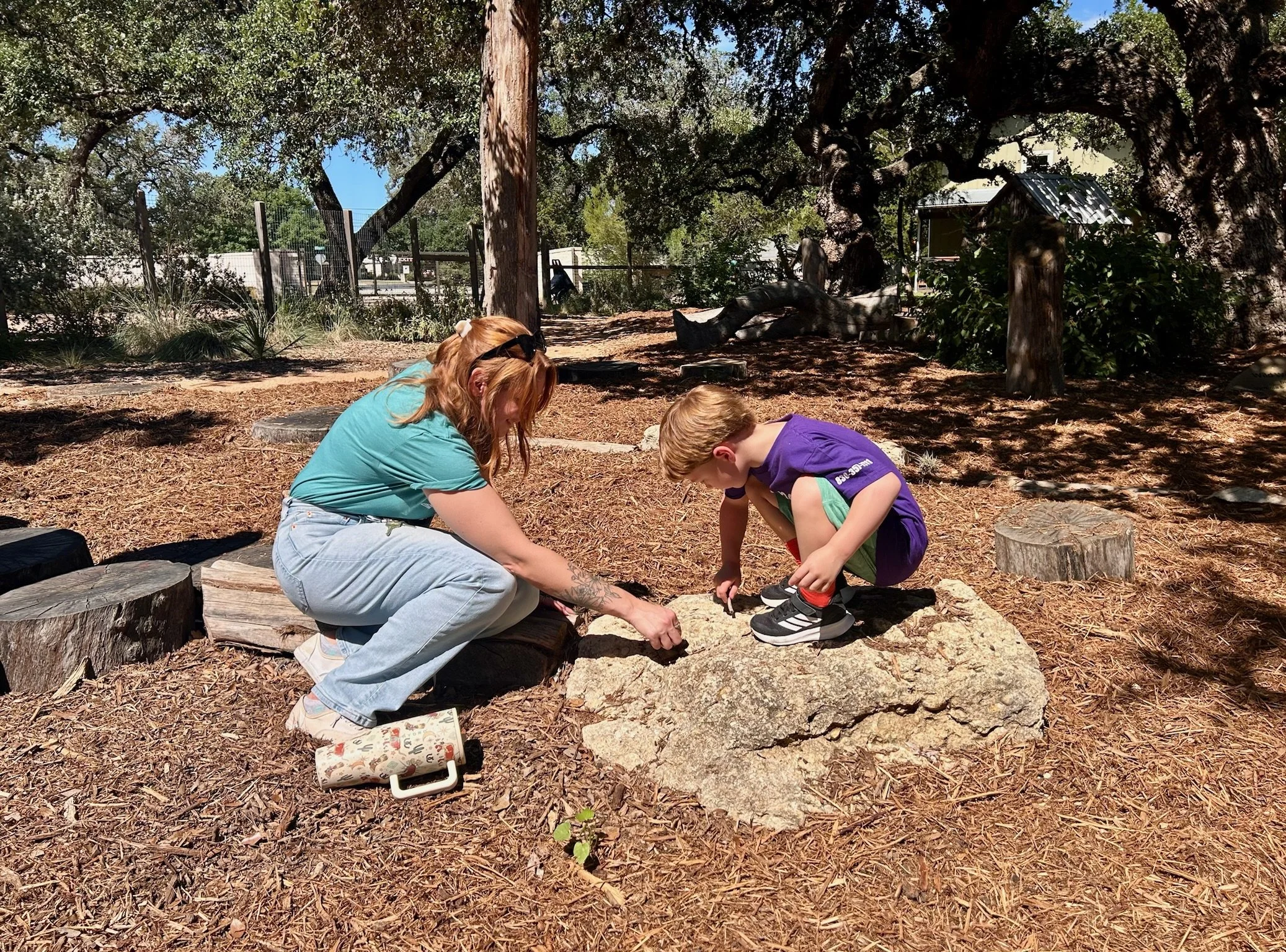
Take a moment to think about your own childhood. What are your best memories? My favorites moments growing up all involve being outside and embracing nature, and I worry that our children will not have those same types of memories if we continue down the path we are on. We are facing a nature deficit epidemic with our children, and the consequences are more dire than I believe we are prepared for. Unstructured outdoor play is beneficial for all aspects of life, including critical thinking, mental health, executive function, creativity, and overall physical health.
Studies show that the average child has only 4-7 minutes of unstructured outdoor play daily, with average screentime up to almost 7 hours per day. Children are spending approximately 35% less time outdoors than their parents did. This could be due to a variety of factors, such as increased school focus on testing, an increasingly digital world, busier lives, and a larger focus on organized sports and activities. While these things are not inherently wrong and some may be unavoidable, I believe that prioritizing unstructured outdoor play will lead to our children growing into more healthy, stable, and successful adults.
My passion, and career, is getting children and their families outside. I have seen the direct benefits of unstructured outdoor play in the students that come through my school, and I have the privilege of seeing how that affects their lives moving forward. Providing children with a safe and controlled space to play outdoors and take risks allows them to learn their body and find their love of nature. Children are so capable and sometimes our desire to protect them can hinder that. Allowing children to take risks, to jump from somewhere a little bit high, to climb a tree, to hop from rock to rock, will help them develop their muscles along with their critical thinking skills. When children face challenges, it allows them to think through what they are doing and what their next step needs to be. This will help them as they are faced with academic challenges in school and beyond.
A safe place for risk taking can be as simple as showing your child you believe in them and their abilities, encouraging them to be independent, and praising them when they succeed. Phrases like: “You climbed down from that tree all on your own, I knew you could! Even though you were scared, you figured it out!” can go a long way. When your child sees that you trust them to take these small risks, they will become increasingly confident in their decisions as they grow, and those situations become even more serious and difficult. Not only is risky and outdoor play beneficial for cognitive development, but it is amazing for physical development as well.
The increase in screen time has directly led to an increase in obesity rates in our children. Getting kids outside and moving their bodies will not only help them now but will help them develop a long-term love and desire to be active. Walking across rocks and uneven surfaces strengthens foot and ankle muscles that do not get the same engagement when walking over a smooth sidewalk surface. Climbing trees or digging with bare hands will help develop fine motor skills that are necessary for handwriting and daily tasks. Building with large sticks and branches and moving rocks from one area to another will help develop your child’s gross motor skills and larger muscles; playing outside is beneficial for the whole body.
Time spent outdoors is also an opportunity for a child’s nervous system to regulate and reset. Getting out of an overstimulating space can allow them to take in the sounds, smells, and feeling of the world around them. This will not only help if they are overstimulated, but it will provide them with a connection to the earth that gives so much to us. This will help them develop an appreciation for the world around them, encouraging them to take care of it in the future. In the fast-paced, busy world we live in it is important for us, and our children, to take a moment to slow down, step outside, and connect with nature.